
كملنا - Kammelna
Remal Information TechnologyCard
4.1498.00 Reviews
- Version
- 3.9.5
- Installs
- 1.00M
- Age Rating
- Everyone
Screenshots
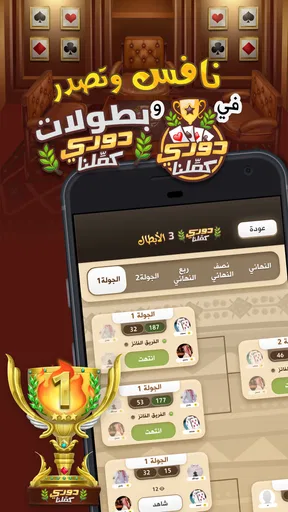
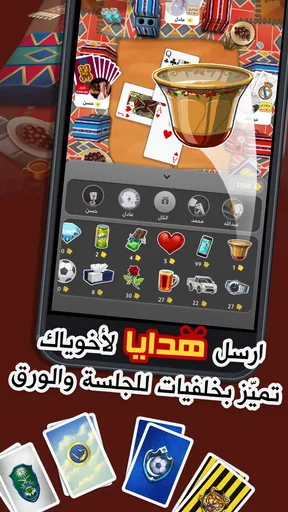
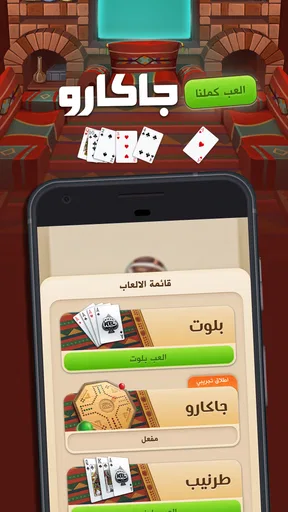
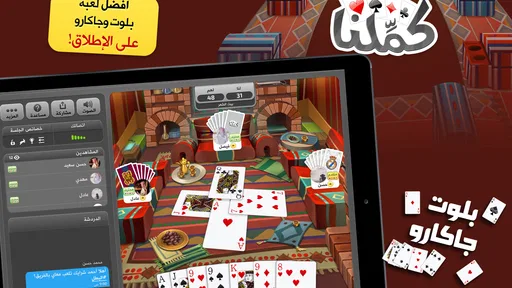
Our Review of كملنا - Kammelna
 Analysis by Appyee
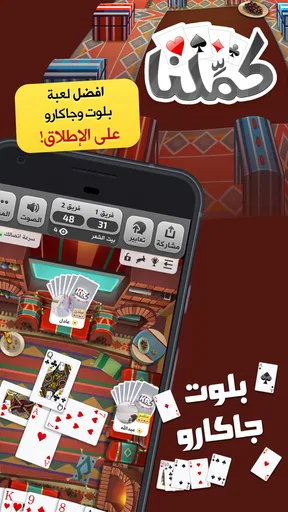
When I open a card game on my phone, I usually want one of two things: a quick match that feels familiar, or a deeper table experience that rewards careful decisions. كملنا - Kammelna sits firmly in the first group, but it has enough character to make repeated games worthwhile. It is a free card game from Remal Information Technology, built around belotte and jackaroo, two formats that will feel especially natural to players who already enjoy regional table games.
My first impression is that this is not trying to be a huge collection of unrelated card modes. Its appeal comes from focusing on a recognizable style of play and making it easy to return to. That focus matters. If you already know belotte or jackaroo, you can get into a match without learning an entirely new game. If you do not know either one, the learning curve depends heavily on how comfortable you are with traditional card-game rules and table vocabulary.
I would describe it as a social, replayable choice for people who like making decisions with a hand of cards rather than chasing fast action. It is free to start, rated for Everyone, and has passed the million-install mark, so it is clearly aimed at a broad audience rather than a small group of specialist players. Still, the right question is not simply whether it is popular. The better question is whether its particular card-table style matches the way you want to play.
What I looked for before recommending it
My main decision criteria were simple: how quickly a player can understand the game, whether the matches remain interesting after the first few rounds, how well the design supports short sessions, and whether the free model gets in the way. I also considered the kind of player who would be happier with a different card-game app, because a focused belotte and jackaroo experience is not automatically the best choice for everyone.
The game identifies itself as “كملنا - Kammelna,” and that identity is important. This is not a generic solitaire title or a collection built around familiar international games. The experience is tied to belotte and jackaroo, which gives it a stronger sense of place than many card apps. For someone who grew up playing these games with family or friends, that familiarity can be more valuable than a long menu of unrelated modes.
At the same time, a newcomer should expect to spend some time understanding the flow. Card games can look simple while hiding important choices about when to play a strong card, when to protect a future turn, and when to avoid helping an opponent. I found that the best way to approach Kammelna is not to judge it after one confused round. Play several hands, notice how scoring and turns work, and then decide whether the rhythm suits you.
The strongest reason to choose it
The focused ruleset gives every decision more weight. Because the app is centered on belotte and jackaroo, you are not constantly jumping between completely different systems. You can learn the habits of the game: watch which cards have appeared, remember what your partner or opponents may still hold, and think about the next trick instead of only the current one.
That makes it useful in a realistic everyday situation. Imagine having ten minutes while waiting for an appointment or taking a break from work. A match can give that short pause a clear beginning and end, without requiring the long attention span of a strategy game. On another day, you may have more time and continue through several rounds because the decisions become more interesting once you stop playing every hand instinctively.
I also like that the game can work as a bridge between casual and serious play. A relaxed player can enjoy the familiar cards and basic turns, while a more experienced player can treat each hand as a small puzzle. The same match can therefore feel light when you are distracted and more demanding when you actively track the table.
How beginners should approach the first matches
If you are new to these games, I recommend resisting the urge to play every attractive card immediately. Start by learning the order of a turn and the consequences of your choices. Pay attention to which suits or card groups have already appeared, and notice how a strong-looking hand can become awkward if played too early.
A useful beginner habit is to review your own decisions after each round. Do not ask only whether you won. Ask whether you used a high-value card because it was necessary, or because you were impatient. That small distinction helps you improve faster than simply repeating matches without thinking.
Another practical tip is to use early games as observation sessions. Watch how experienced opponents respond to pressure. If someone avoids spending a powerful card, there may be a reason that is not obvious from the current trick. This is one of the less visible strengths of a traditional card format: the game teaches you to read patterns, not just react to animations.
Where the app feels most comfortable
Kammelna makes the most sense for players who already recognize the names belotte and jackaroo, or who specifically want to learn them. It is also a good fit for people who prefer a familiar table-game atmosphere over a flashy arcade presentation. The broad Everyone rating makes it approachable for mixed-age households, although younger players may still need help understanding the rules and strategy.
The free entry point is another practical advantage. You can try the core experience without committing money first, which is exactly what I want from a card game. The current version is 3.9.5, and the game supports devices running Android 7.1 or later. That makes it accessible to people who are not using the newest phone, although performance can still depend on the individual device and its available space.
The public response is encouraging without making the game immune to criticism: it holds an average rating of 4.1 from around 104 thousand ratings, with more than 498 reviews listed. I read that as a sign of a solid audience rather than proof that every player will love it. Card-game preferences are personal, and players who dislike partnership-based or rule-heavy rounds may not respond to the same qualities that attract regular fans.
Where it wins against common alternatives
Compared with solitaire, Kammelna offers a more social and reactive experience. Solitaire is excellent when you want complete control over the pace and no pressure from another player or side. Kammelna is better when you want your decisions to interact with an opponent or partner. A mistake here is not just a missed arrangement of cards; it can change the direction of the whole hand.
Compared with poker-style games, it is less about bluffing and more about reading the structure of the hand. You are not relying only on a dramatic wager or a single strong combination. The satisfaction comes from timing, memory, and understanding what the table is likely to do next. Players who enjoy calculated card play but do not want a gambling-centered atmosphere may find that distinction important.
Compared with broad card-game collections, the narrow focus is both a strength and a limitation. A collection gives you variety and lets you switch to solitaire, rummy, or another familiar mode when your mood changes. Kammelna instead gives its featured games room to become comfortable. If belotte and jackaroo are the reason you are downloading, that is a worthwhile trade. If you want ten different games in one app, it may feel restrictive.
Compared with a physical deck around a table, the phone version is more convenient but less personal. You do not need to find three other people, prepare a table, or keep track of every card manually. That convenience is especially useful when friends or family are not nearby. On the other hand, no mobile interface fully replaces the conversation, teasing, and shared routine of a real table. I see Kammelna as a practical substitute for unavailable company, not a complete replacement for the social ritual.
Small strategic habits that improve the experience
One non-obvious advantage of a digital card game is that it encourages consistency. In a physical game, a distracted player may forget a card or lose track of the sequence. On a phone, the interface keeps the action moving in a more orderly way. I still recommend concentrating, but the digital format reduces some of the friction that can make traditional games feel intimidating to newcomers.
My second tip is to separate learning sessions from competitive sessions. During the first few rounds, deliberately test how different choices affect the result instead of worrying about winning. Once the rules feel natural, begin tracking cards and planning several turns ahead. This two-stage approach prevents beginners from confusing a lack of familiarity with a lack of skill.
A third useful trade-off concerns session length. Short play is convenient, but rushing can lead to poor choices. If you only have a minute or two, a slower card game may not be the right use of your time. If you have a quiet break, however, the measured pace can be exactly what makes it relaxing. I would not choose it for instant, one-thumb entertainment; I would choose it when I want a little mental involvement.
Where another option may fit better
I would point a complete card-game beginner toward a simpler solitaire or tutorial-led title if they want immediate clarity. Kammelna can be welcoming, but belotte and jackaroo are not automatically self-explanatory to someone encountering them for the first time. If your priority is learning through obvious visual instructions, a more introductory app may reduce the initial friction.
I would also suggest a broader card collection to anyone who gets bored quickly with one style of play. Kammelna’s focus is meaningful, but it means you are choosing depth and familiarity over a long list of modes. Likewise, if your favorite card games depend on elaborate deck-building, collectible cards, or fantasy progression, this is probably not the experience you are seeking.
Players who strongly prefer offline play should think carefully before switching from a physical deck or an offline card app. The convenience of a phone is appealing, but the value of Kammelna depends on how its digital matches fit your normal routine. I would install it for its specific table games, not simply because it is a free card title.
What the free model means in practice
You can download and start playing without paying, which lowers the risk of trying it. There are in-app purchases ranging from $0.99 to $74.99 per item, so I would keep an eye on the purchase flow if children use the device or if you prefer a completely spending-free setup. The free starting point is useful, but “free” does not mean every optional purchase is irrelevant to every player.
My advice is to play long enough to decide whether the actual card experience holds your attention before considering any purchase. Do not spend to solve a problem you have not identified. If the game already gives you the matches you want, there is no reason to treat optional spending as part of the basic decision.
The cost of switching is relatively low if you are coming from another mobile card game: download it, learn its particular rules, and see whether the table rhythm feels natural. The bigger cost is attention. A player who has already invested time mastering another format may need patience before the new habits become automatic. That is why I would not switch solely because Kammelna is popular; I would switch because belotte or jackaroo is specifically what I want to play.
There is also a social switching cost. If your friends already use another game together, moving to a different app only makes sense if the new format gives everyone a reason to follow. Kammelna is strongest when the people around you already enjoy its style of card play or are willing to learn it. For solo breaks, that issue matters less. For a regular group, shared interest matters more than the download itself.
Who should install it
I recommend Kammelna to players who want a dedicated belotte and jackaroo game, especially those who enjoy traditional card decisions, repeated short matches, and the satisfaction of gradually reading a table better. It is a sensible first try for someone looking for a free mobile version of these formats rather than a large arcade package.
I also think it suits families and friends who want a familiar card activity available on demand. The Everyone rating supports that broad audience, while the strategic depth gives older or more experienced players something to think about beyond simply matching cards. Just be prepared to explain the rules if the people joining you have never played before.
I would skip it if you want solitaire-style relaxation with no opponent, a large variety of card modes, or a fast game that can be understood instantly. I would also skip it if the possibility of optional purchases makes you uncomfortable, unless you are willing to manage that part of the phone experience carefully.
My recommendation after weighing the trade-offs
After using it as a focused card-game option, I see كملنا - Kammelna as a good recommendation for the right audience rather than a universal replacement for every card app. Its best quality is its commitment to belotte and jackaroo. That focus creates a familiar, repeatable experience with enough strategic texture to reward attention, while the free download makes trying it straightforward.
The limitations are equally clear. New players may need time to understand the rules, and anyone seeking a broad library of modes may outgrow the narrow selection. The free model also includes optional purchases, so I would approach spending deliberately instead of assuming the basic download tells the whole story.
For me, the decision comes down to one question: do you want these particular table games, or do you merely want any card game? If the answer is belotte or jackaroo, I think this is worth installing and giving several proper matches. If the answer is simply “something quick with cards,” a simpler or broader alternative may serve you better. For its intended player, though, Kammelna offers a convenient way to keep a thoughtful, familiar card tradition close at hand.
Verdict
Strengths of كملنا - Kammelna
- Simple interface makes it easy to browse and join available games.
- Supports social play, helping friends organize matches in one place.
- Arabic-focused experience feels familiar to local users.
- Useful notifications can keep players updated about game activity.
- Suitable for discovering nearby or online recreational games.
Limitations of كملنا - Kammelna
- Game availability may depend heavily on your location and local user activity.
- Some features may require account registration or personal information.
- Notifications can become distracting if many games or invitations are active.
- The user base may be smaller outside Arabic-speaking communities.
- Performance and loading times may vary with network quality.
Similar Picks in This Category
View All
Solitaire - Classic Card Games
MobilityWare4.6

UNO!™
Mattel163 Limited4.3

Spider Solitaire: Card Games
MobilityWare4.6

Solitaire.com - Classic Cards
Tripledot Studios Limited4.7

Plants vs. Zombies™ Heroes
ELECTRONIC ARTS4.1

Hearthstone
Blizzard Entertainment, Inc.4.1
Frequently Asked Questions
What is كملنا - Kammelna and what can I use it for?
كملنا - Kammelna is a social entertainment application designed to help users connect, communicate, and enjoy shared activities through their mobile devices. Depending on the available version and region, it may include social rooms, conversations, games, or community-based features. After installing it, users should explore the main sections and review the app’s current permissions and terms to understand exactly which features are available.
Is كملنا - Kammelna free to download and use?
The application may be available to download without an upfront payment, but some features can depend on optional purchases, virtual items, subscriptions, or other in-app services. Before using any paid function, check the pricing shown inside the app and confirm the payment details through Google Play or the App Store. Availability, prices, and included features can vary by country, device, and app version.
Do I need to create an account to use كملنا - Kammelna?
Many social applications require users to register or sign in before accessing communication, profile, community, or interactive features. Kammelna may ask for information such as a phone number, email address, or social login, depending on the version you install. Creating an account can provide a more complete experience, although some introductory content may be accessible before registration. Always review the privacy options during setup.
Is كملنا - Kammelنا safe for children and younger users?
Parents should check the application’s age rating and privacy policy before allowing children to use it. Because Kammelna is centered around social interaction or community content, users may encounter messages, profiles, or material created by other people. Younger users should use strong privacy settings, avoid sharing personal information, and communicate only with trusted contacts. Parental supervision is recommended, especially during a first-time installation.
What permissions and device requirements does كملنا - Kammelna need?
The permissions requested by Kammelna can depend on the features you use and whether the app supports messaging, notifications, media uploads, voice communication, or account verification. Review each permission request rather than accepting everything automatically, and disable access that is not necessary. You should also keep Android or iOS updated and install the latest official version to improve compatibility, stability, and security.
Play our best games!


